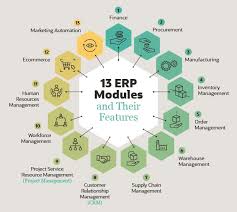
In 2026, Artificial Intelligence (AI) is no longer an experimental feature inside Enterprise Resource Planning (ERP) systems—it is a core capability. AI-powered ERP platforms are transforming how enterprises operate, compete, and grow by turning vast amounts of operational data into intelligent insights and automated actions.
From predictive forecasting to real-time risk detection, AI is redefining the role of ERP from a transactional backbone to a strategic decision-making engine.
The Evolution of ERP: From Automation to Intelligence
Traditional ERP systems focused primarily on integrating business processes such as finance, procurement, inventory, and human resources. While automation improved efficiency, decision-making still required significant human analysis.
Modern platforms like SAP S/4HANA Cloud, Oracle Fusion Cloud ERP, and Microsoft Dynamics 365 now embed AI and machine learning directly into workflows.
This shift allows ERP systems to:
Learn from historical data
Predict future outcomes
Recommend optimal actions
Automatically execute routine decisions
ERP is no longer just reactive—it is predictive and proactive.
Predictive Analytics for Smarter Forecasting
One of the most significant transformations in 2026 is predictive forecasting powered by AI.
AI-driven ERP systems analyze historical sales patterns, market trends, and seasonal fluctuations to deliver accurate demand forecasts. This enables enterprises to:
Optimize inventory levels
Reduce overstock and stockouts
Improve production planning
Enhance cash flow management
For global organizations, predictive analytics reduces uncertainty and strengthens supply chain resilience.
Intelligent Financial Management
AI-powered ERP systems are revolutionizing financial operations by increasing speed, accuracy, and compliance.
Key advancements include:
Automated invoice matching
Real-time anomaly detection
Fraud risk identification
Predictive cash flow analysis
For example, Oracle Fusion Cloud ERP leverages AI to continuously monitor financial transactions and flag irregularities instantly. This reduces manual auditing efforts and improves regulatory compliance.
Finance teams now focus less on data entry and more on strategic financial planning.
AI-Driven Supply Chain Optimization
Supply chain disruptions have forced enterprises to become more agile. AI-powered ERP systems now analyze global supplier performance, transportation data, and demand signals in real time.
Platforms such as SAP S/4HANA use machine learning to:
Identify supply chain risks
Suggest alternative suppliers
Optimize logistics routes
Predict delivery delays
This level of intelligence significantly enhances operational continuity and customer satisfaction.
Hyperautomation of Routine Tasks
AI combined with robotic process automation (RPA) is creating hyperautomation within ERP environments.
In 2026, ERP systems can automatically:
Process purchase orders
Reconcile bank transactions
Approve expense claims
Generate compliance reports
This reduces human error and operational costs while accelerating workflow cycles.
Enterprises benefit from higher productivity and improved employee satisfaction, as teams can focus on high-value activities instead of repetitive tasks.
Personalized User Experience with AI Assistants
AI-powered virtual assistants are becoming standard in ERP platforms. These digital assistants provide real-time recommendations, answer user queries, and generate reports through natural language interaction.
For instance, users of Microsoft Dynamics 365 can leverage AI copilots to quickly analyze financial performance or track KPIs.
This improves:
Decision-making speed
User adoption rates
Operational visibility
ERP interfaces are becoming more intuitive and user-friendly than ever before.
Enhanced Risk Management and Compliance
AI enhances enterprise risk management by continuously monitoring transactions, supplier activity, and financial patterns.
AI-driven ERP systems can:
Detect compliance violations
Identify suspicious transactions
Monitor ESG metrics
Predict operational risks
This proactive approach helps enterprises avoid financial penalties and reputational damage.
Data-Driven Strategic Decision Making
In 2026, AI-powered ERP systems act as strategic advisors. Executives can access real-time dashboards powered by predictive models that simulate various business scenarios.
Enterprises can:
Evaluate expansion opportunities
Assess investment risks
Model pricing strategies
Forecast long-term growth
With AI insights, decision-making becomes faster, more accurate, and data-backed.
Challenges of AI-Powered ERP Adoption
Despite the benefits, enterprises face several challenges:
Data quality and integration issues
High implementation complexity
Employee skill gaps
Ethical concerns around AI governance
Successful transformation requires clear strategy, executive sponsorship, and strong change management initiatives.