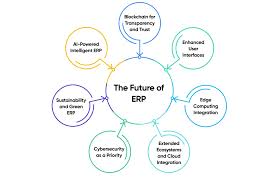
As businesses navigate rapid technological change, economic uncertainty, and rising customer expectations, Enterprise Resource Planning (ERP) systems continue to evolve. In 2026, ERP software is no longer just a back-office system — it has become a strategic platform that drives innovation, automation, and competitive advantage.
Here are the top ERP software trends shaping business in 2026.
1. AI-Driven ERP Becomes the Standard
Artificial Intelligence (AI) is now embedded directly into modern ERP platforms. Solutions such as SAP S/4HANA Cloud and Oracle Fusion Cloud ERP integrate machine learning to automate processes, predict demand, and identify financial anomalies.
In 2026, AI-powered ERP systems can:
Forecast sales with higher accuracy
Automate invoice matching
Detect fraud patterns
Optimize procurement decisions
AI is transforming ERP from a transactional system into an intelligent decision-support platform.
2. Cloud-First and Hybrid ERP Adoption
Cloud ERP is no longer an emerging trend — it is the dominant deployment model. Businesses increasingly prefer cloud platforms for flexibility, scalability, and lower upfront costs.
Platforms like Microsoft Dynamics 365 Business Central and NetSuite allow companies to scale globally without heavy infrastructure investment.
However, hybrid ERP models are also gaining traction, allowing companies to combine on-premise systems with cloud applications for greater flexibility.
3. Composable and Modular ERP Architecture
In 2026, businesses demand flexibility. Instead of adopting a monolithic system, organizations are choosing composable ERP architectures.
Vendors such as Infor and Epicor offer modular ERP solutions where companies can implement only the features they need.
This approach allows:
Faster deployment
Lower implementation costs
Easier upgrades
Greater customization
Composable ERP supports business agility in fast-changing markets.
4. Advanced Data Analytics and Real-Time Insights
Data has become a strategic asset. Modern ERP systems now provide real-time dashboards and predictive analytics that empower executives to make informed decisions quickly.
For example, SAP S/4HANA leverages in-memory computing to process large volumes of data instantly.
Key benefits include:
Real-time financial reporting
Supply chain visibility
Predictive maintenance
Performance tracking
In 2026, ERP is not just about storing data — it’s about transforming data into actionable intelligence.
5. Stronger Focus on Cybersecurity and Compliance
As ERP systems centralize critical business data, cybersecurity has become a top priority. Companies are investing heavily in advanced security features such as:
Multi-factor authentication
Role-based access control
Encryption and zero-trust architecture
Automated compliance reporting
Leading vendors including SAP and Oracle Corporation continuously enhance security frameworks to meet global compliance standards.
6. ERP and Automation Integration
Robotic Process Automation (RPA) is increasingly integrated into ERP systems to eliminate repetitive manual tasks.
In 2026, ERP platforms can automatically:
Process purchase orders
Reconcile bank statements
Generate payroll reports
Update inventory levels
Automation reduces operational costs while improving accuracy and speed.
7. Industry-Specific ERP Solutions
Generic ERP systems are being replaced by industry-specific platforms tailored to sectors like manufacturing, retail, healthcare, and logistics.
Solutions such as Infor CloudSuite provide vertical-specific features that reduce customization needs and accelerate implementation timelines.
Industry-focused ERP solutions deliver faster ROI and improved operational alignment.
8. Sustainability and ESG Integration
Environmental, Social, and Governance (ESG) reporting is becoming mandatory in many regions. ERP systems in 2026 include sustainability tracking features that help companies monitor carbon emissions, energy consumption, and ethical sourcing.
ERP now supports:
Automated ESG reporting
Carbon footprint tracking
Supplier sustainability evaluation
Sustainability is no longer optional — it’s embedded into ERP strategy.
9. Mobile-First ERP Experience
Executives and managers expect full ERP access from smartphones and tablets. Modern ERP platforms offer mobile dashboards, approval workflows, and analytics tools accessible anywhere.
This mobility enhances:
Remote workforce productivity
Faster approvals
Real-time performance monitoring
ERP in 2026 is fully accessible and location-independent.
10. Seamless ERP Integration Ecosystems
ERP systems are no longer standalone platforms. Businesses integrate ERP with CRM, e-commerce, HR tech, and third-party analytics tools.
For example, integration between Salesforce and ERP platforms ensures synchronized customer, order, and financial data.